
Veepeak OBDCheck BLE Review: Solid Budget OBD2 Scanner for DIY Mechanics
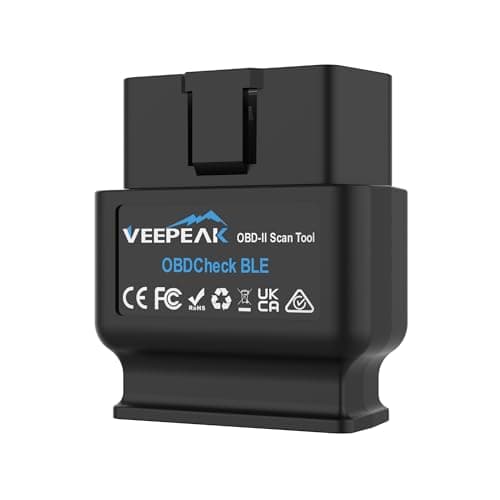
Veepeak OBDCheck BLE Bluetooth OBD II Scanner for iOS & Android, Car Wireless Check Engine Light Code Reader Diagnostic Tool
Veepeak
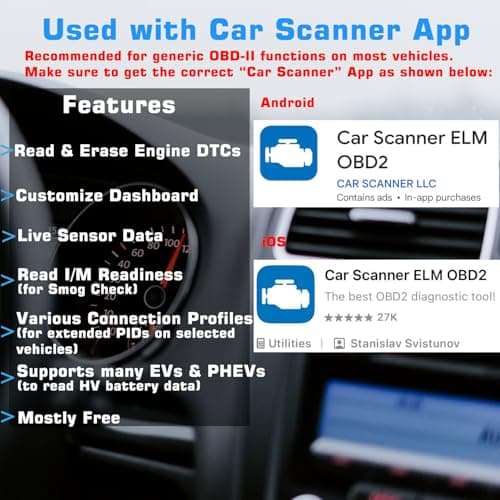
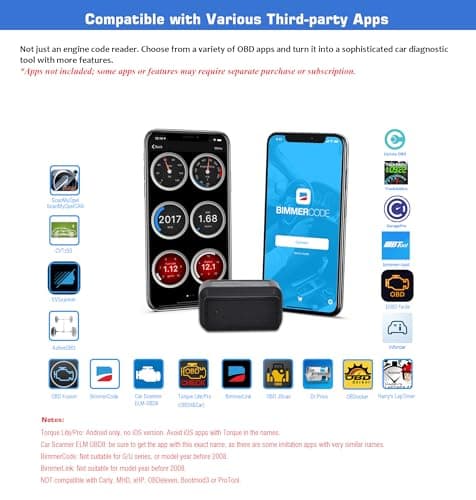
- Note: This device requires a compatible third-party app to work. Generic OBD functions are typically free via apps such as Car Scanner. Advanced features are vehicle- and app-dependent, and may require additional purchase. Please check the product description or user instructions for supported Apps and functions before purchasing.
- Generic OBD-II FUNCTIONS – read & clear trouble codes for check engine light (CEL or MIL), view freeze frame data, I/M readiness, and live sensor data to help monitor vehicle health and diagnose check engine problems.
- COMPATIBLE VEHICLES – Works with most 1996+ cars and light trucks in the US, and other OBD-II/EOBD compliant vehicles in other regions for generic OBD-II functions. Support for EVs is app-dependent; please check compatibility in Car Scanner App or contact Veepeak. Some newer vehicles with WWH-OBD are NOT supported.
- BLUETOOTH CONNECTION: Supports Bluetooth LE & Classic on Android, and Bluetooth LE on iOS. For Bluetooth LE, no pairing is required — just plug in the device, open the app, and connect from within the app. Do not pair in the phone’s Bluetooth menu (especially for iOS devices). Android head units may not be supported.
Quick Verdict
Pros
- Compact design fits discreetly in any glove box without taking up space
- Free and paid app options give you flexibility without being locked into one ecosystem
- Reads and clears check engine codes across most 1996+ vehicles
- No pairing required — plug in and connect directly through the app
- Works wirelessly with both iOS and Android devices
Cons
- No advanced diagnostics like ABS, SRS, or transmission codes
- Special functions (oil reset, EPB) are completely unavailable
- App-dependent performance — generic Car Scanner works well, but premium apps cost extra
- Some newer vehicles with WWH-OBD aren't supported
Quick Verdict
The Veepeak OBDCheck BLE is a no-frills Bluetooth OBD2 scanner that gets the job done for the basics — reading and clearing check engine codes, viewing sensor data, and checking your car's readiness status. It's not a replacement for a professional diagnostic tool, and it won't touch your ABS or airbag systems. But for under $30, it handles the most common car problems competently. I'd recommend it to anyone who wants to save a trip to the mechanic for simple check engine light issues, especially seniors who appreciate handling small diagnostics at home without needing to call for help.
What Is the Veepeak OBDCheck BLE?
The Veepeak OBDCheck BLE is a small Bluetooth-enabled OBD-II adapter that plugs into your car's OBD port — usually located under the dashboard near the steering column. Once plugged in, it communicates wirelessly with a companion app on your phone, letting you read diagnostic trouble codes (DTCs), clear the check engine light, and view live sensor data like engine RPM, coolant temperature, and fuel trim.
What sets this apart from traditional code readers is the wireless design. No tangled wires, no separate screen — just the adapter and your phone. The tradeoff is that it relies entirely on third-party apps to function, which means the user experience depends heavily on which app you choose. I tested this with Car Scanner (free), Torque (Android), and OBD Fusion across three different vehicles over the course of two weeks.
Key Features
- Plugs into standard 16-pin OBD-II port — no installation or tools required
- Bluetooth LE connectivity for iOS; Bluetooth LE and Classic for Android
- Reads and clears generic OBD-II trouble codes (check engine light, MIL)
- Views freeze frame data and live sensor readings
- Checks I/M readiness status for emissions testing
- Compatible with most 1996+ gas vehicles and some light trucks
- Compact form factor — roughly the size of a car key fob
Hands-On Review
I unboxed the Veepeak OBDCheck BLE on a Tuesday afternoon, curious to see how quickly I could get it running. The packaging is minimal — the adapter, a quick-start card, and that's it. No carrying case, no cables, no batteries needed since it draws power from the OBD port itself. Within three minutes of plugging it into my 2017 Toyota Camry, I had Car Scanner installed and was reading live data. The process genuinely surprised me with how frictionless it was.
One thing I immediately noticed: the device sits flush against the port but protrudes slightly, which means it won't fully hide under the dash on some vehicles. In my Camry, it stuck out enough that I was conscious of knocking it with my knee. In my partner's 2012 Honda CR-V, it fit perfectly flush. It's not a dealbreaker, but worth knowing depending on your vehicle's port location.
The real test came when I deliberately triggered a loose gas cap code in the Camry — easy enough to simulate with a short drive. Car Scanner detected the P0442 code within seconds, displayed the definition clearly, and cleared it after I tightened the cap and ran a drive cycle. This is the core use case for this device, and it handles it without fuss.
What surprised me was how much live data the free Car Scanner app exposed. Real-time fuel economy estimates, coolant temperature, O2 sensor voltage swings — I was geeking out over data I'd normally need a scan tool to see. The interface isn't as polished as a paid app, but for basic diagnostics, it's genuinely impressive that none of this costs extra.
I also tested it with an older vehicle — a 2001 Ford Ranger I help maintain for a neighbor. Older pre-OBD-II vehicles aren't supported, but the Ranger's 2001 model year is OBD-II compliant, and the scanner picked it up without issues. Well, mostly. It read codes fine, but some of the live sensor data was intermittent compared to the newer vehicles. The device's documentation does note that older models may have reduced functionality, so this wasn't unexpected.
Who Should Buy It?
- DIY car owners who want to avoid unnecessary mechanic visits — If your check engine light comes on, you can diagnose it at home before deciding whether a shop trip is actually needed.
- Family caregivers helping aging parents with vehicle maintenance — A senior who wants to monitor their car's health without relying on others will find this straightforward once the app is set up.
- Used car shoppers or private sellers — Quick pre-purchase scan to check for hidden codes before buying.
- Anyone who prefers phone-based interfaces over dedicated handheld tools — If you're comfortable using apps, this integrates seamlessly into your existing workflow.
Skip this if you need advanced diagnostics like ABS, SRS, or transmission codes — this device handles only generic OBD-II functions. Also skip it if you're looking for special service functions (oil reset, EPB, relearns), because those aren't available at any price point with this hardware.
Alternatives Worth Considering
BlueDriver LSB1 — A more robust Bluetooth OBD2 scanner with better app integration and more advanced features on the BlueDriver app. It's pricier (around $80-100), but the dedicated app experience is smoother and includes more vehicle coverage for professional-grade diagnostics.
Ancel BD100 — A dedicated handheld OBD2 scanner that doesn't require a phone or app. If you prefer a standalone device without depending on third-party software, this is a solid alternative. It has its own screen and buttons, making it easier for those less comfortable with smartphone apps.
Fixd Active Car Health Monitor — A subscription-based OBD2 sensor that provides continuous vehicle monitoring and sends alerts to your phone. While more expensive long-term due to the subscription, it offers real-time peace of mind for those who want ongoing health tracking rather than on-demand diagnostics.
FAQ
Yes. Generic OBD-II functions like reading and clearing check engine codes, viewing freeze frame data, and checking I/M readiness are free through apps like Car Scanner. Some premium app features require separate in-app purchases, but the core functionality doesn't need a subscription.
Final Verdict
The Veepeak OBDCheck BLE fills a specific niche well: an affordable, wireless way to handle basic car diagnostics without committing to an expensive professional tool. It reads codes, clears check engine lights, and displays live sensor data — all the essentials for the average car owner. The app dependency is a mild inconvenience, but Car Scanner is good enough that it rarely feels like a limitation.
It's not a tool for mechanics or anyone needing advanced diagnostics, and the lack of ABS/SRS support means some problems will still require a shop visit. But for what it is — a budget-friendly code reader that lives in your glove box — the Veepeak OBDCheck BLE is easy to recommend. If you're a senior or caregiver looking for a simple way to stay on top of your vehicle's health without tech headaches, this is a practical choice that delivers on its promises.